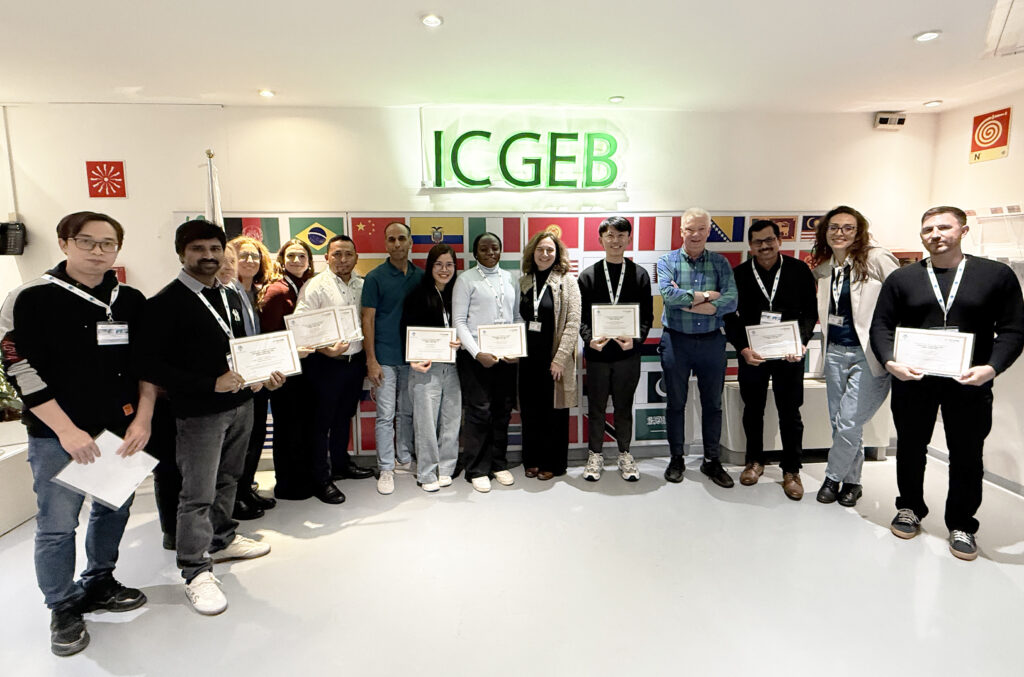
DCVMN is pleased to share the successful completion of the 6th edition of the DCVMN Technology Transfer Training, delivered in collaboration with the International Centre for Genetic Engineering and Biotechnology (ICGEB), Italy. The programme combined a comprehensive online learning phase with an intensive, hands-on practical phase, reinforcing DCVMN’s commitment to strengthening vaccine manufacturing capacity in developing countries.
The training began in early November with a five-week online phase, bringing together 10 participants from 9 DCVMN member companies across 4 different WHO regions. This first segment focused on the theoretical foundations of technology transfer and included virtual learning modules, twice-weekly interactive sessions with experts, and practical assignments. Participants explored key topics such as intellectual property and licensing considerations, GMP and regulatory requirements, vaccine manufacturing process platforms, step-by-step approaches to conducting successful technology transfers, and common challenges and pitfalls.
Building on this theoretical foundation, participants then travelled to ICGEB Trieste to complete the in-person, hands-on segment of the training at the Biotechnology Development Unit (BDU). Conducted in a GMP-like training environment, this practical module was designed to translate theory into practice and strengthen participants’ real-world technology transfer skills.
Throughout the in-person segment, each day focused on applying a specific aspect of the concepts covered during the online phase. Participants worked through practical exercises in the GMP-like facility, gaining first-hand experience in implementing technology transfer processes in conditions that closely reflect those found in operational manufacturing settings.
Commenting on the training, DCVMN CEO Rajinder Suri stated:
“I am confident that this training will enable participants to return home and strengthen their teams, enhancing capacity in their countries.”
Dr Natasa Skoko, Head of the Biotechnology Development Unit at ICGEB and responsible for the training, highlighted the value of the practical approach, noting:
“This allows participants to experience the concepts learned in a live GMP-like environment where they learn by doing.”
With the completion of both phases, participants will now return to their companies equipped to share knowledge with colleagues, strengthen internal processes, and amplify the impact of the training across their companies and countries, translating learning into concrete action.
DCVMN extends its sincere appreciation to ICGEB team, trainers, and participants for their engagement and commitment to advancing sustainable vaccine manufacturing and technology transfer capacity globally.